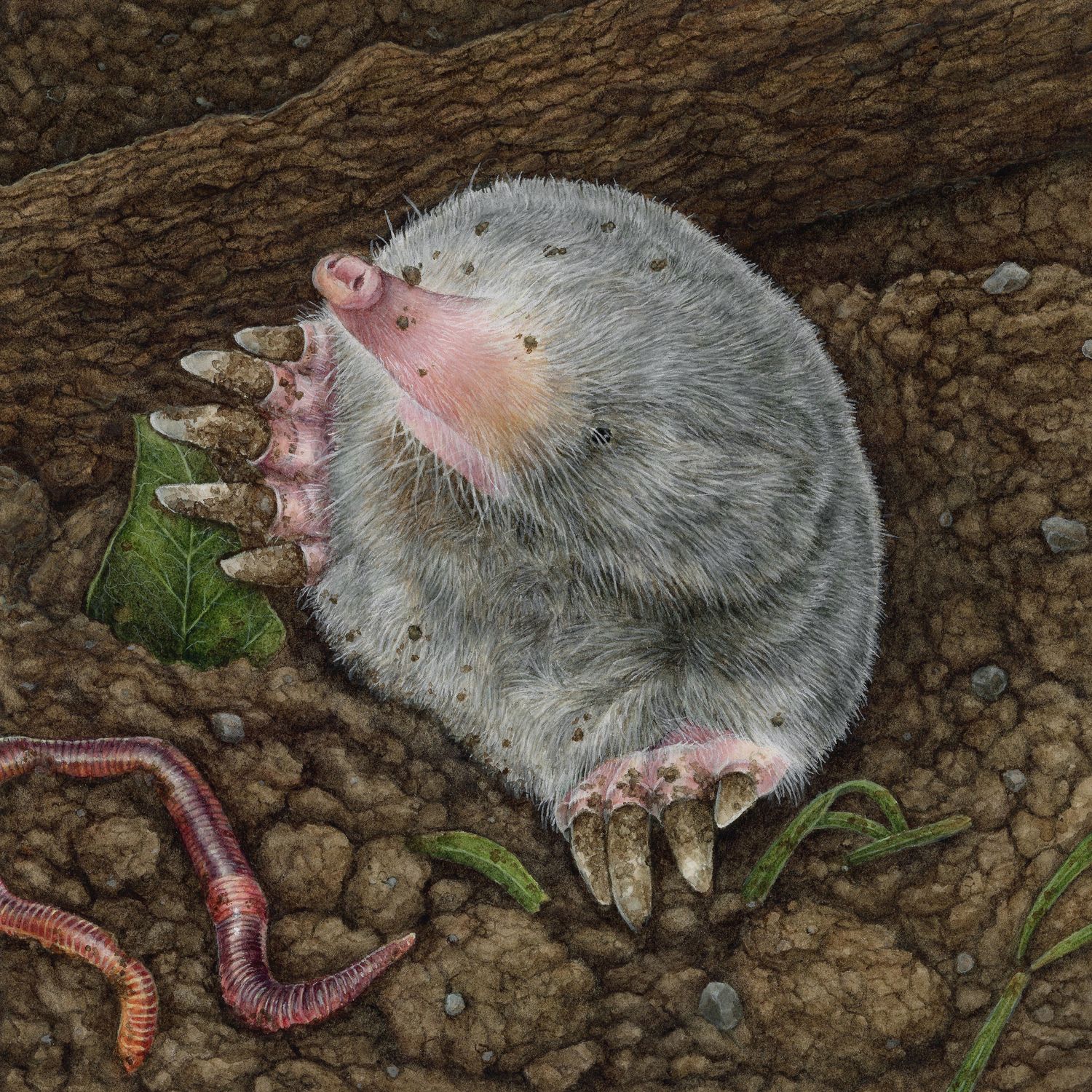
Matted Art Print- Mat Size: 8"x8" | Image Size: 5"x5"
Unmatted Art Print- Print Size: 8"x8" | Image Size: 7"x7"
This is a hand signed print of an original watercolor painting titled "Elisa the Eastern Mole". Each image is printed with archival inks on watercolor paper stock for a long lasting print resistant to fading. For every print sold, I will be donating 10% of the profit to wildlife rehab facilities, organizations & sanctuaries.
The Story Behind the Art:
Years ago, I began my training to become a wildlife rehabber at Nashville Wildlife Conservation Center (NWCC). It was there that learned about a former patient named Elisa, an eastern mole. Elisa arrived at NWCC after being accidentally dug up as a newborn alongside her two siblings. While her siblings sadly passed away, Elisa survived thanks to round-the-clock care from a certified wildlife rehabber named Elisa (her namesake), who fed her every 90 minutes. You can imagine the dedication it took to care for this precious animal. Because she was raised alone, Elisa became habituated to humans and was deemed non-releasable. However, she became a vital educational ambassador at NWCC. Although Elisa the mole passed away before I started my training, her legacy lived on. During her time at NWCC, she helped in educating many people about the importance of moles and their benefits to our ecosystem.
Eastern Mole Facts:
Eastern moles are found throughout central and eastern North America in fields, forests, lawns, and gardens with loose, well-drained soil. They have flexible snouts, webbed paws with large claws for digging, and fur varying in color between silver, brown and black. Although nearly blind and lacking external ears, they have an exceptional sense of smell and touch, which they use during the 21 to 23 hours a day they spend foraging. Their diet consists mainly of earthworms, ants, centipedes, beetle larvae, and grubs, providing natural insect population control.
Additionally, eastern moles spend nearly their entire lives underground, capable of tunneling up to 18 feet per hour in loose soil. While some view this tunneling as a "disturbance" to their gardens, it is actually highly beneficial to the environment. Their digging aerates the soil and improves water percolation, creating a healthier environment for plants to thrive!